
Why Businesses Are Moving From Traditional Software to SaaS Solutions
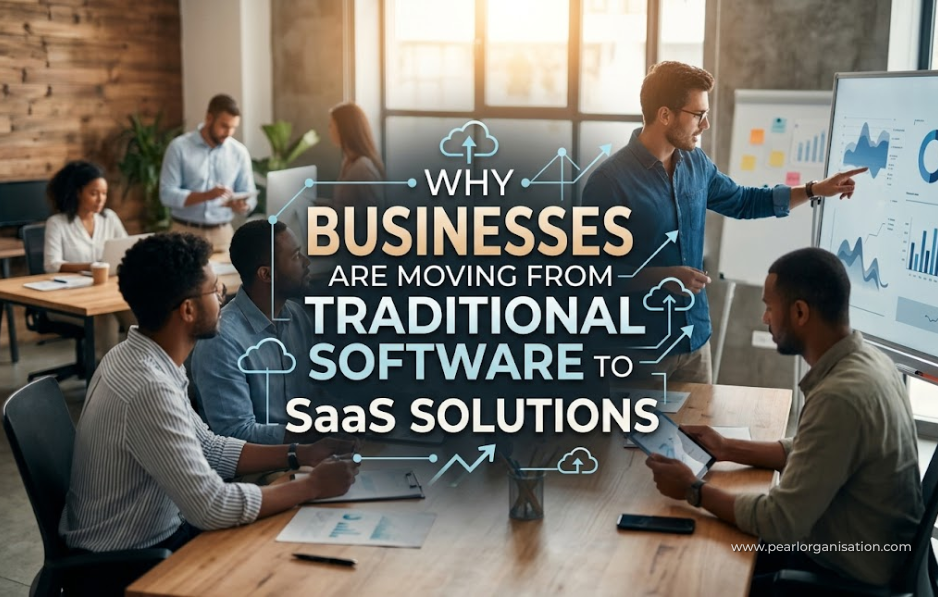
Every technology decision a business makes eventually comes down to a simple question: does this tool help us move faster, or does it slow us down? For three decades, the default answer to enterprise software was to buy a license, install it on a server, and maintain it in-house. That default has quietly flipped. Today, most new software purchases, from CRM and accounting to HR, analytics, and customer support, are bought as a subscription and accessed through a browser.
This shift from traditional, on-premise software to Software-as-a-Service (SaaS) is not a passing trend. It reflects a fundamental change in how businesses want to consume technology: with lower upfront risk, faster deployment, and the flexibility to scale up or down as circumstances change. Industry projections show the global SaaS market continuing its rapid climb toward the trillion-dollar mark within the next several years, driven by exactly these forces, accessibility, scalability, and cost-effectiveness.
This guide breaks down the real differences between traditional software vs SaaS, explains why enterprises and growing businesses alike are making the switch, and looks at what a successful transition actually requires, including the software integration work that determines whether a SaaS rollout succeeds or stalls. We'll also look specifically at what this shift means for businesses in Somalia, where cloud-first adoption is opening doors that on-premise infrastructure never could.
What Is Traditional Software?
Traditional software, sometimes called on-premise or licensed software, is installed directly onto a company's own computers or servers. The business typically pays a one-time license fee (or a periodic licensing fee) up front, then takes on responsibility for installation, configuration, hardware, and ongoing maintenance. Well-known examples of this model include locally installed ERP systems, on-premise accounting suites, and enterprise resource planning platforms that run entirely within a company's own data centre.
This approach gives businesses a high degree of control. Because the software and data live on infrastructure the company owns or directly manages, IT teams can customise deeply, enforce their own security protocols, and avoid depending on a third party's uptime. That control comes at a cost, though: hardware purchases, server maintenance, in-house IT staffing, and manual update cycles all add up, and scaling the system to support more users or more data usually means buying more infrastructure.
TOTAL COST OF OWNERSHIP
Higher upfront
Traditional software requires significant upfront investment in licensing, hardware, and IT staffing before a business sees any return.
What Is SaaS?
SaaS software solutions flip the traditional model on its head. Instead of installing software locally, businesses access applications over the internet, hosted and maintained by the provider on cloud infrastructure. There's no hardware to buy, no local installation, and no in-house server to patch. Users simply log in through a browser, and the provider handles updates, security patching, backups, and uptime behind the scenes.
The commercial model changes too. Rather than a large upfront license purchase, SaaS is typically sold as a subscription, monthly or annual, which converts a capital expense into a predictable operating expense. This is one of the biggest reasons finance teams favor SaaS: it's easier to budget for, easier to scale up or down, and it removes the risk of sinking a large sum into infrastructure that may be outdated within a few years.
Well-known SaaS platforms for businesses include cloud-based CRM systems for managing customer relationships, productivity suites for collaboration and file sharing, and cloud storage tools that let teams work across devices from anywhere. What they share is a common architecture: multi-tenant, cloud-native, and built to be updated continuously rather than through disruptive version upgrades.
Traditional Software vs SaaS: Head-to-Head Comparison
Understanding SaaS vs traditional software in the abstract is one thing, seeing how the two models actually compare across the factors that matter to a business is another. Here's how they stack up.
Cost Structure
Traditional software often demands significant upfront costs: licensing fees, server hardware, and the IT staff needed to install and run it. SaaS software solutions replace that with a predictable subscription fee, and because the provider handles maintenance, businesses typically spend less on internal IT overhead as well. Over a multi-year horizon, SaaS is usually the lower-risk financial choice for small and mid-sized businesses, though very large enterprises with stable, high-volume usage sometimes find that owned infrastructure evens out over time.
Deployment and Time-to-Value
A traditional software rollout can take weeks or months, procurement, installation, configuration, and testing all happen before a single employee logs in. SaaS platforms for businesses, by contrast, can often be provisioned in days. Because the infrastructure already exists on the vendor's side, a new customer is mostly configuring settings and importing data rather than building a system from scratch.
Scalability
Scaling traditional software usually means buying more servers, more licenses, and more IT hours. SaaS scales elastically, adding users, storage, or features is typically a matter of adjusting a subscription tier, and the underlying cloud infrastructure absorbs the extra load without the business needing to plan capacity itself.
Maintenance and Updates
With traditional software, the business is responsible for patching, upgrading, and troubleshooting, often requiring a dedicated IT function. SaaS providers push updates continuously and automatically, which means customers always run the current version without scheduling downtime for upgrades.
Security and Compliance
This is where traditional software still holds genuine advantages for some organisations. Keeping data entirely on-premise gives full control over where data lives and how it's protected, which matters for industries with strict regulatory or data-residency requirements. Reputable SaaS providers, however, now invest heavily in enterprise-grade security, encryption, and compliance certifications, often exceeding what an individual company could build and maintain on its own.
Accessibility and Remote Work
Traditional software is typically tied to the device or network it's installed on, which limits remote access. SaaS is accessible from any device with an internet connection, which has made it the natural fit for distributed teams, field staff, and businesses operating across multiple locations or countries.
Traditional Software vs SaaS at a Glance
Factor | Traditional Software | SaaS |
Upfront cost | High (licenses, hardware) | Low (subscription-based) |
Deployment time | Weeks to months | Days |
Maintenance | In-house IT required | Handled by provider |
Scalability | Manual, hardware-dependent | Elastic, on-demand |
Accessibility | Device/network limited | Any device, anywhere |
Updates | Manual, scheduled | Automatic, continuous |
Data control | Full, on-premise | Shared with provider |
Customization depth | High | Moderate to high (config-based) |
Why Businesses Worldwide Are Making the Switch to SaaS

The reasons businesses are moving away from traditional software are consistent across industries and geographies. First is cost predictability: converting a large capital outlay into a manageable monthly fee frees up budget for other priorities and reduces financial risk. Second is speed: businesses today don't have the patience for a six-month software rollout when a SaaS competitor can be live in a week.
Third, and increasingly decisive, is the pace of innovation. SaaS vendors ship improvements continuously, including AI-driven features that would take years to develop in-house. A business running traditional software is often locked into whatever capabilities existed when it was last upgraded; a business running SaaS gets new capabilities automatically, often without lifting a finger.
Finally, there's resilience. Distributed teams, hybrid work, and multi-country operations all demand software that isn't tied to a single office network. SaaS, by design, removes that constraint. Taken together, these forces explain why the shift from traditional software to SaaS isn't a temporary preference; it's a structural change in how software gets bought and used.
SaaS Solutions for Enterprises: What Changes at Scale
For large organisations, the calculus around SaaS looks a little different than it does for a small business. Enterprises have more complex requirements, cross-department workflows, larger data volumes, stricter governance, and dozens or hundreds of existing systems that any new platform has to work alongside. SaaS solutions for enterprises have matured specifically to address this: modern platforms now offer granular permissioning, audit trails, dedicated tenancy options, and service-level guarantees that rival what a company could build internally.
The advantage for enterprises isn't just cost; it's focus. By relying on specialised SaaS platforms for businesses to handle CRM, HR, supply chain, or analytics, internal teams can concentrate on the work that actually differentiates the company, rather than maintaining infrastructure that offers no competitive edge. Enterprise-grade SaaS also tends to be built with the assumption that it will need to talk to other systems, which brings us to one of the most important, and most overlooked parts of any SaaS transition.
The Role of Software Integration in a Successful SaaS Transition
No SaaS platform operates in isolation. A CRM needs to sync with billing. An HR system needs to feed payroll. An analytics tool needs data from half a dozen other places. This is where software integration becomes the deciding factor between a SaaS rollout that delivers real value and one that just adds another disconnected tool to the stack.
Good integration work typically involves connecting SaaS platforms through APIs, setting up secure and reliable data flows between systems, and making sure information stays consistent across every tool a business relies on. Done well, integration is largely invisible, data simply moves where it needs to go, and employees never have to manually re-enter the same information in three different systems. Done poorly, it creates data silos, duplicate records, and the exact inefficiency that moving to SaaS was supposed to eliminate.
This is also where the choice of implementation partner matters most. Off-the-shelf SaaS tools are built to be flexible, but connecting them correctly, especially alongside legacy systems that aren't going away immediately, requires real engineering discipline. Businesses that treat integration as an afterthought are the ones most likely to end up disappointed with their SaaS investment; businesses that plan for it from day one are the ones who see the productivity gains they expected.
SaaS Application Development: Build vs Buy
Not every business need is met by an off-the-shelf SaaS product. Sometimes a company's workflow, industry, or customer base is specific enough that a custom-built SaaS application is the better long-term investment, either for internal use or as a product sold to others. SaaS application development covers this space: building cloud-native, multi-tenant software from the ground up, designed to scale from a handful of users to thousands without a rebuild.
A well-executed SaaS application typically shares certain traits regardless of industry: a multi-tenant architecture that keeps each customer's data properly isolated, an API-first design that makes future integrations straightforward, subscription and billing logic built in from the start, and infrastructure that can scale horizontally as usage grows. Increasingly, this also means designing with AI-native capabilities in mind, rather than bolting automation on after the fact.
The build-vs-buy decision usually comes down to differentiation. If the workflow in question is standard across an industry, buying an existing SaaS platform is almost always faster and cheaper. If the workflow is genuinely unique to the business, the thing that gives it a competitive edge, custom SaaS application development is often the better long-term bet, because it produces software the business fully owns and controls.
Choosing the Right SaaS Development Company
Whether a business is migrating to an existing SaaS platform, building a custom application, or handling complex integration work, the partner doing that work matters enormously. A capable SaaS development company should bring more than coding ability, it needs to understand cloud architecture, data security, scalable infrastructure, and the practical realities of connecting new systems to whatever a business already runs.
When evaluating a SaaS development company, a few questions tend to separate the strong candidates from the rest: Does the team have proven experience with multi-tenant, cloud-native architecture? Can they demonstrate a track record of successful software integration work, not just greenfield builds? Do they understand compliance requirements relevant to your industry? And critically, will they still be a reliable partner after launch, for the ongoing updates and support that any SaaS product needs over its lifetime?
The right partner treats a SaaS project as a long-term relationship rather than a one-off delivery. That's the standard businesses should hold any development partner to, whether the project is a full custom build, a migration from legacy systems, or an integration layer connecting several SaaS platforms.
SaaS Solutions for Businesses in Somalia: A Growing Opportunity

Somalia's business landscape is undergoing rapid digital change, and SaaS is playing a central role in that shift. For companies in Mogadishu and beyond, cloud-based software solves a problem that traditional, on-premise systems never could: the need for heavy local infrastructure investment before software can even be deployed. SaaS software solutions in Somalia let businesses skip that step entirely, accessing enterprise-grade tools through nothing more than a stable internet connection, no server room, no dedicated IT department, and no long procurement cycle standing between a business and the tools it needs.
This matters especially for sectors like finance, telecommunications, logistics, and retail, where Somali businesses are competing regionally and need modern tools to do it. SaaS application development in Somalia is enabling local companies to build software tailored to Somali market conditions, including mobile-first design, multi-currency support, and integration with the mobile money systems that dominate everyday transactions across the country. A locally relevant SaaS application, built with these realities in mind from day one, tends to see far higher adoption than a generic international tool retrofitted for the market after the fact.
For growing businesses, the appeal of SaaS solutions for businesses in Somalia is straightforward: lower upfront cost, faster deployment, and the ability to scale as the business grows rather than over-investing in infrastructure early. A small trading company can start with a lightweight cloud accounting and inventory setup, then add CRM, HR, and analytics modules as headcount and revenue grow, without ever needing to rip out and replace the foundation.
And because so many Somali businesses run a mix of legacy tools, spreadsheets, and newer cloud platforms, software integration services in Somalia have become just as important as the SaaS platforms themselves. Reliable software integration services in Somalia connect disparate systems so that data actually flows between finance, operations, and customer-facing teams instead of living in disconnected silos and spreadsheets that nobody fully trusts. This is often the single biggest factor separating a Somali business that gets real value from its SaaS investment from one that ends up with yet another tool nobody uses consistently.
Partnering with a SaaS development company in Somalia that understands both the technical requirements of cloud software and the practical realities of the local business environment, connectivity constraints, mobile-first usage patterns, regional compliance considerations, and the specific rhythm of how Somali businesses operate day to day,gives Somali businesses a real advantage as they modernise. It's the difference between adopting SaaS because it's fashionable and adopting SaaS because it measurably changes how the business runs.
Where SaaS Goes Next: What Businesses Should Watch
The SaaS model itself continues to evolve, and businesses making the switch today are buying into a moving target, in a good way. Three trends are shaping where SaaS software solutions are headed over the next few years, and they're worth understanding before committing to any platform or provider.
The first is the shift toward AI-native architecture. Rather than treating artificial intelligence as an add-on feature, leading SaaS platforms for businesses are being rebuilt around AI at the core, automating routine decisions, surfacing insights without manual reporting, and in some cases handling entire workflows with minimal human input. Businesses evaluating a SaaS development company today should ask not just what the platform does now, but how actively AI capability is being built into its roadmap.
The second is the move toward modular, API-first design. As businesses adopt more specialized SaaS tools rather than a single do-everything platform, the ability to integrate cleanly becomes non-negotiable. This is pushing software integration from a nice-to-have into a core competency that businesses need either in-house or through a trusted partner, because the value of any individual SaaS platform is increasingly tied to how well it plays with everything else in the stack.
The third is security maturing from a differentiator into table stakes. Tenant isolation, encryption, and proactive threat detection are now baseline expectations for any serious SaaS application development effort, not premium features reserved for enterprise tiers. Businesses, whether evaluating SaaS solutions for enterprises in established markets or SaaS software solutions in Somalia's fast-growing digital economy, should treat security posture as a primary selection criterion, not an afterthought.
Why Pearl Organisation

Pearl Organisation is a global IT and digital business transformation company built around a simple conviction: technology should remove friction from how a business operates, not add to it. Rather than positioning itself as just another vendor selling software licenses, Pearl Organisation works as a long-term technology partner, one that stays involved through architecture decisions, development, integration, and the years of support that follow a successful launch.
That philosophy shapes how the company approaches every engagement. Instead of pushing a one-size-fits-all platform, Pearl Organisation starts by understanding how a business actually operates, its existing systems, its growth plans, and the workflows that make it competitive, and designs a SaaS strategy around that reality. This is as true for enterprises modernising legacy infrastructure as it is for growing businesses in emerging markets like Somalia, where the right cloud strategy can leapfrog years of infrastructure investment.
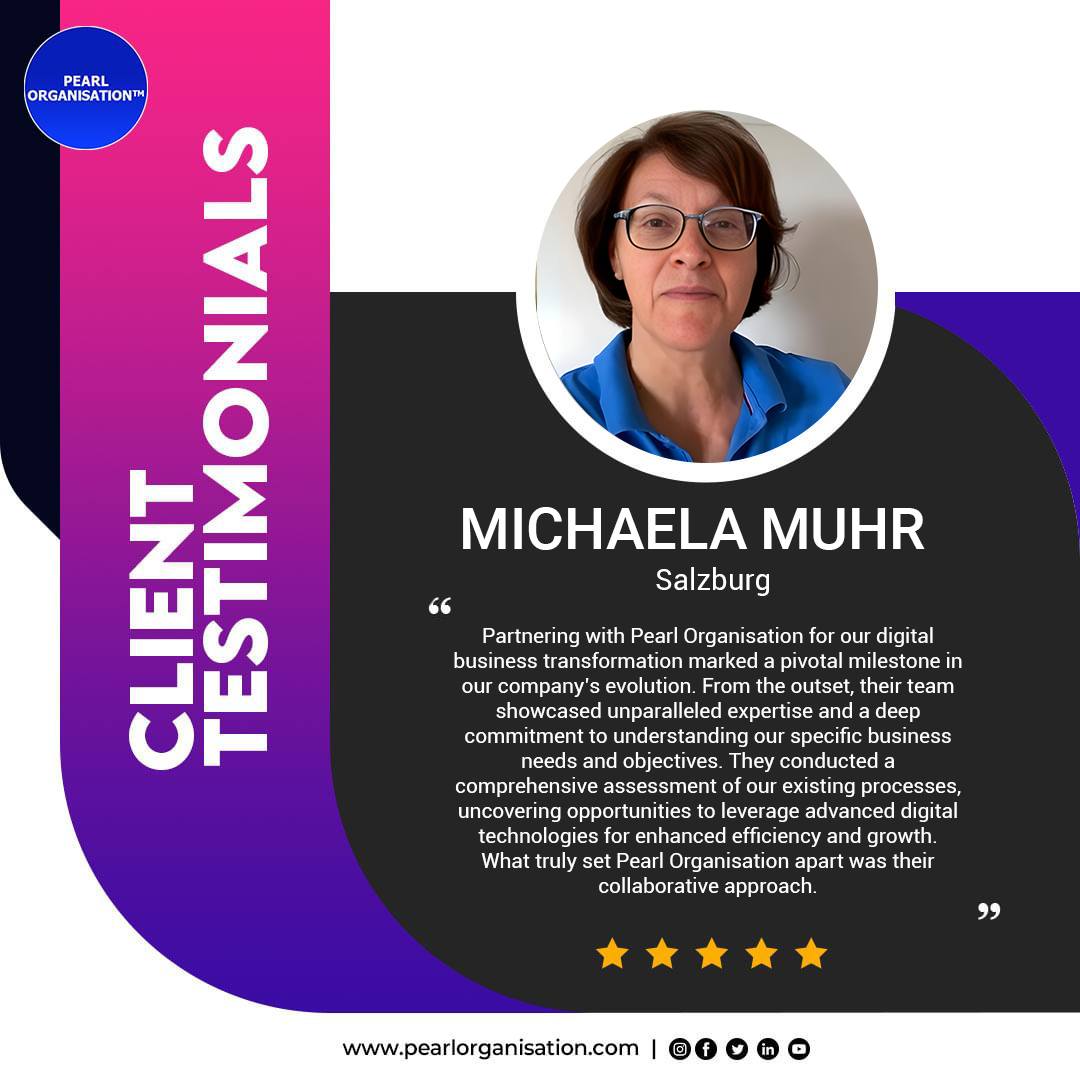
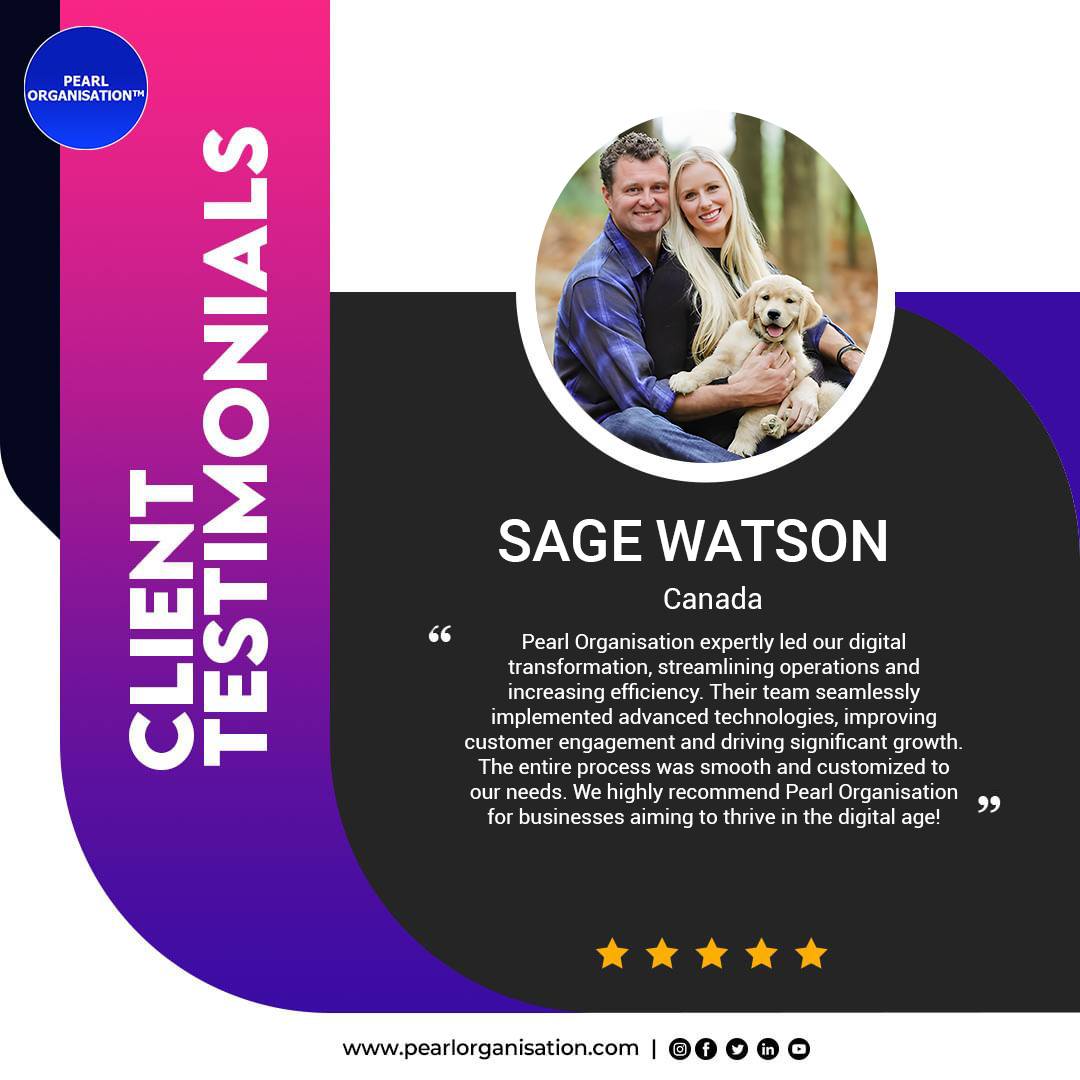
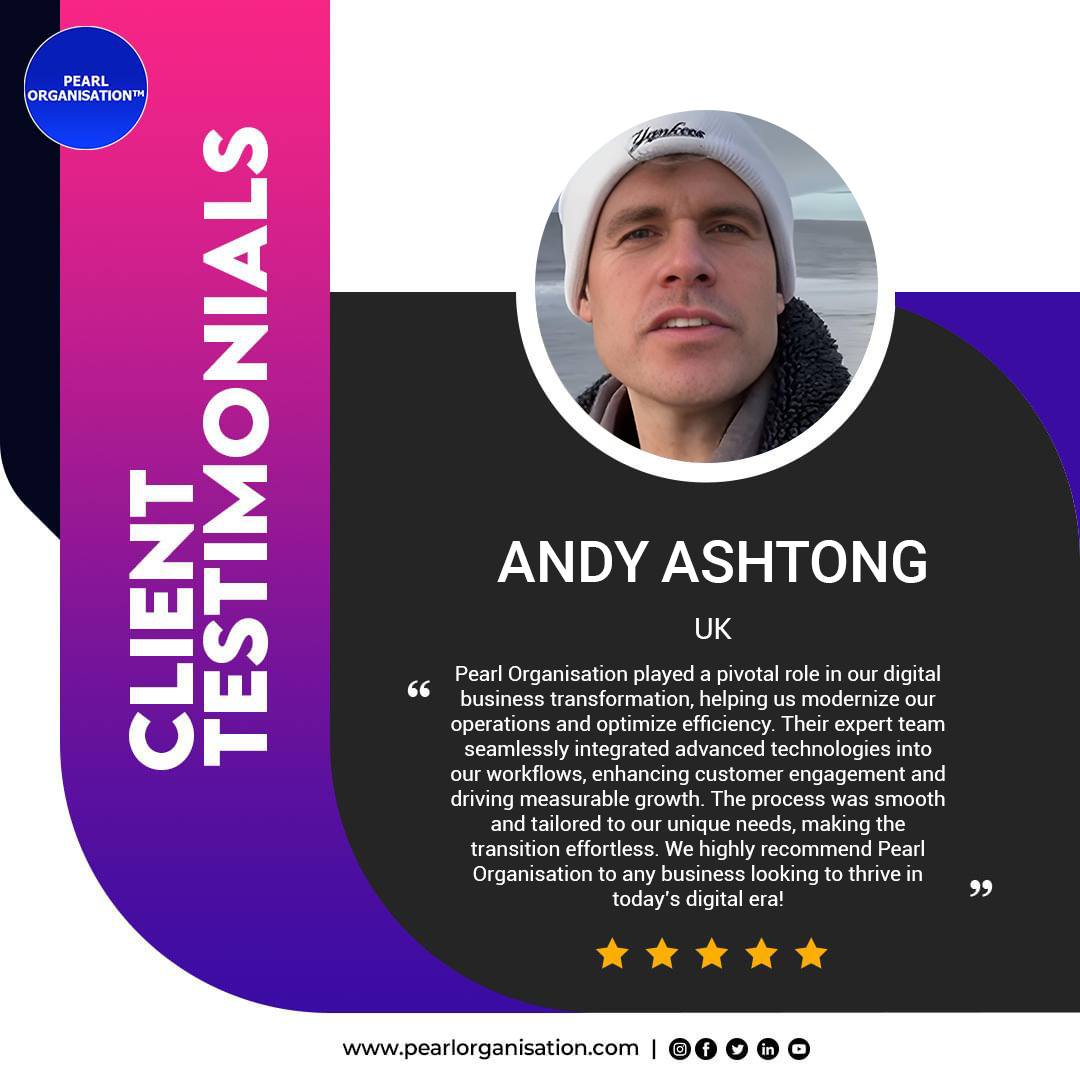
Pearl Organisation's engineering teams bring deep experience across SaaS application development, enterprise software integration, and cloud-native architecture, backed by a track record of delivering scalable, secure platforms across global markets including Morocco, Switzerland, the Philippines, the UK, Canada, Saudi Arabia, and beyond. Whether the need is a custom SaaS application built from the ground up, a migration from traditional software, or an integration layer connecting a dozen existing tools, Pearl Organisation approaches each project with the same standard: build software that genuinely makes the business faster, not just software that's newer.
For businesses in Somalia specifically, Pearl Organisation offers a combination that's hard to find locally, global engineering standards paired with an understanding of the region's connectivity realities, mobile-first usage patterns, and market conditions, delivered by a company with genuine global depth rather than a purely local footprint.
Common Migration Challenges — and How to Avoid Them
Even a well-planned move to SaaS runs into predictable friction points. Data migration is usually the first: moving years of records out of a legacy system without losing history, duplicating entries, or breaking relationships between records requires careful mapping, not just a bulk export and import. Rushing this step is one of the most common reasons a SaaS rollout starts on the wrong foot.
User adoption is the second recurring challenge. Even the best SaaS platforms for businesses fail to deliver value if employees quietly keep using the old spreadsheet or the legacy tool out of habit. Change management, training, clear communication about why the switch is happening, and visible early wins matter just as much as the technical implementation.
The third challenge, and the one most directly tied to long-term success, is under-investing in software integration. Businesses sometimes treat integration as a final cleanup step rather than a core part of the project plan, which leads to manual workarounds that quietly erode the efficiency gains SaaS was supposed to deliver. Building integration into the project timeline from the outset, rather than bolting it on after go-live, consistently produces better outcomes.
What a SaaS Transition Looks Like in Practice

A typical transition from traditional software to SaaS follows a recognisable pattern, regardless of company size or industry. It starts with an audit, mapping existing systems, data flows, and pain points to understand what's actually being replaced and why. From there, the business selects the right mix of SaaS platforms for businesses, or scopes a custom SaaS application development project if off-the-shelf tools won't fit.
The middle phase is where most of the real engineering happens: configuring the new platform, migrating historical data without loss or corruption, and building the software integration layer that connects the new system to everything else the business still relies on. This is also the phase most likely to be rushed, and the one most likely to determine whether the rollout succeeds.
The final phase is adoption: training staff, monitoring usage, and iterating based on real feedback rather than assumptions made during planning. Businesses that treat this as an ongoing process, rather than a one-time project with a fixed end date, are consistently the ones who see the productivity and cost benefits that motivated the switch in the first place.
Frequently Asked Questions
What is the main difference between traditional software and SaaS?
Traditional software is installed and run on a company's own hardware, usually purchased through a one-time license. SaaS is hosted by the provider and accessed over the internet through a subscription, with updates and maintenance handled by the vendor rather than the customer.
Is SaaS cheaper than traditional software?
In most cases, yes, especially in terms of upfront cost. SaaS converts a large capital expense into a smaller, predictable subscription fee and reduces the need for in-house IT infrastructure. Very large organisations with stable, high-volume needs sometimes find that owned infrastructure becomes cost-competitive over a long enough timeline, but for most businesses, SaaS remains the lower-cost path.
Can SaaS platforms integrate with our existing systems?
Yes. Most modern SaaS platforms are built with APIs specifically to support integration. The quality of that integration, however, depends heavily on how it's planned and executed, which is why working with an experienced software integration partner matters.
Is SaaS secure enough for enterprise or regulated industries?
Reputable SaaS providers invest heavily in encryption, access controls, and compliance certifications, often matching or exceeding what an individual company could maintain internally. Businesses in regulated industries should still confirm that a given SaaS provider meets the specific compliance requirements relevant to their sector.
How long does it take to move from traditional software to SaaS?
Timelines vary by complexity, but a well-scoped migration for a single business function can often be completed in weeks rather than months. Larger, multi-system transitions involving significant integration work naturally take longer.
Are SaaS solutions viable for businesses in Somalia given connectivity constraints?
Yes, and increasingly so. Modern SaaS platforms are built to work well even on variable connections, and many are optimised for mobile-first usage, a natural fit for how business is conducted across much of Somalia. The bigger factor is choosing a development and integration partner who understands local conditions.
Conclusion: The Shift Is Already Underway
The move from traditional software to SaaS isn't a question of if anymore; for most businesses, it's a question of how well the transition is planned and executed. The businesses getting the most value from SaaS aren't necessarily the ones with the biggest budgets; they're the ones who chose the right platforms, invested properly in software integration, and partnered with teams who understood both the technology and their specific business context.
Whether the goal is adopting SaaS solutions for enterprises, developing a custom SaaS application, or bringing modern software integration services to a business in Somalia, the fundamentals stay the same: start with a clear understanding of the business need, choose tools and partners built for scale, and treat the transition as an ongoing relationship rather than a single project.
Ready to Make the Move to SaaS?
Pearl Organisation helps businesses and enterprises worldwide, including Somalia, plan, build, and integrate SaaS solutions that actually fit how they operate. Whether you're migrating from traditional software, building a custom SaaS application, or need dependable software integration across your existing systems, our team is ready to help.






 150+
150+
 250+
250+
 21,000+
 11,600+